How Airbnb Co-Hosting Works: The Platform Setup
Setting up co-hosting on Airbnb is straightforward. The property owner invites a co-host through their listing settings, assigning specific permissions: messaging access, calendar management, pricing control, or full listing administration. The co-host accepts the invitation through their own Airbnb account, and their profile becomes linked to the listing.
Airbnb's permission system lets owners control exactly what co-hosts can do. At the basic level, co-hosts can respond to messages and view the calendar. At full access, they can modify pricing, update listing details, and manage reservations. It is worth noting that Booking.com and VRBO have different co-management structures -- Airbnb's is the most flexible and well-developed as of 2026. Once linked, the co-host receives notifications for new bookings, guest messages, and reviews, allowing them to manage the listing as if it were their own.
How Much Do Airbnb Co-Hosts Charge? Revenue Splits Explained
The standard Airbnb co-host fee ranges from 10-25% of booking revenue, depending on the scope of services provided. Here is how it breaks down by service level:
| Service Level | Scope | Typical Split | Monthly Earnings ($3K property) |
|---|
| Basic | Guest messaging only | 10-15% | $300-$450 |
| Standard | Messaging + cleaning + check-in | 15-20% | $450-$600 |
| Full-service | Everything including pricing | 20-30% | $600-$900 |
Market location affects these ranges. High-demand urban markets (Austin, Miami, Nashville) tend to push splits lower because there is more competition among co-hosts. Rural and resort markets where reliable co-hosts are scarce can command higher percentages. The key variable is how much time each property requires: a well-systemized listing with automated messaging and smart locks needs far less co-host involvement than a high-maintenance property with complex check-in procedures.
Fixed Fee vs Percentage: Which Model Works Better?
Some co-hosts charge a flat monthly fee instead of a revenue percentage. Fixed fees provide income predictability for the co-host and cost predictability for the owner, but they remove the incentive alignment that makes percentage-based models effective. When the co-host earns more as the property earns more, both parties benefit from optimization efforts. For most co-hosting arrangements, a percentage model is the better choice, especially in the first year when revenue is still being established.
The Co-Hosting Agreement: What to Include
Every Airbnb co-hosting arrangement needs a written agreement, even between friends or family members. A co-hosting agreement protects both the property owner and the co-host by clearly defining expectations, compensation, and exit terms. Here is what yours should cover:
- Scope of services: Exactly which tasks the co-host will handle (messaging, cleaning, pricing, check-in, etc.)
- Compensation structure: Percentage or fixed fee, payment schedule, and how earnings are calculated
- Contract duration: Start date, minimum term, and renewal terms
- Termination clause: Notice period and conditions for early termination by either party
- Liability allocation: Who is responsible for property damage, guest injuries, or booking disputes
- Insurance requirements: Minimum coverage both parties should carry
- Property access: Key/lockbox arrangements and when the co-host can enter the property
- Performance expectations: Response time targets, minimum review scores, and occupancy goals
The most common source of co-hosting disputes is ambiguity around scope. Be specific. If the agreement says "guest communication," clarify whether that includes phone calls at 2 AM or only platform messages during business hours.
What Skills Does a Successful Co-Host Need?
The skills that make a great Airbnb co-host are practical and learnable. Guest communication tops the list -- you need to respond quickly (ideally within 15 minutes) with a friendly, professional tone that resolves issues efficiently. Problem-solving is equally critical: guests will lock themselves out, pipes will burst, and noise complaints will happen. How you handle these moments defines your reputation.
Beyond crisis management, successful co-hosts need local market knowledge (what properties rent for, seasonal demand patterns, local regulations), basic pricing strategy (when to raise and lower rates), and tech literacy. Most co-hosts in 2026 use a property management system (PMS), automated messaging tools, and dynamic pricing software. Achieving and maintaining Superhost status on your own listings also builds credibility when pitching co-hosting services to property owners.
How AI Tools Are Replacing Traditional Co-Hosting Tasks
Traditional Airbnb co-hosts spend 60-70% of their time on guest communication, check-in coordination, and FAQ handling. In 2026, AI hospitality tools now automate the majority of these tasks, fundamentally changing the co-hosting value proposition.
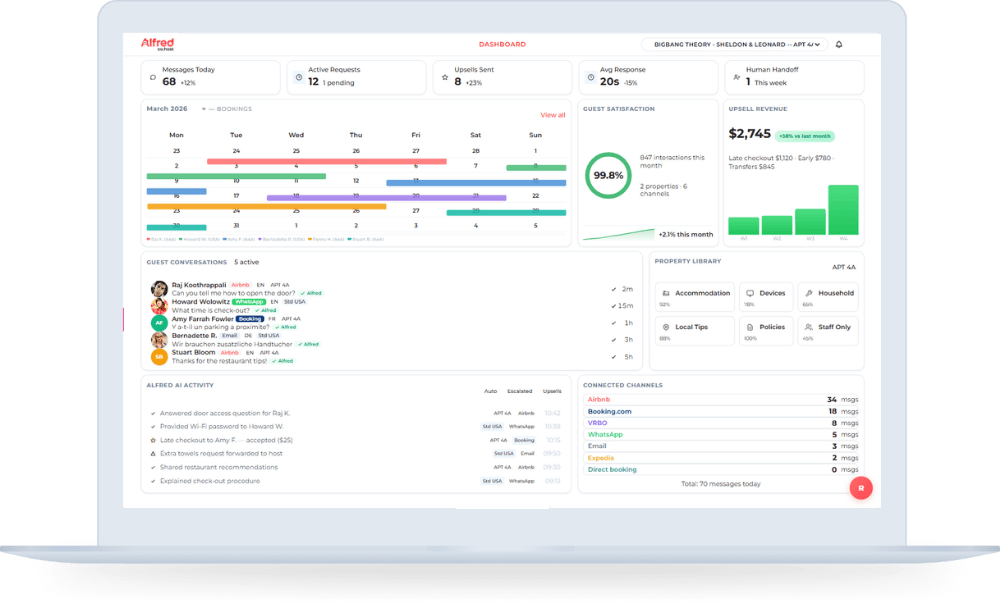
An AI guest assistant handles guest messaging 24/7 in multiple languages, responds to booking inquiries in under two minutes, sends automated check-in instructions triggered by booking confirmation, answers property-specific FAQs instantly, and can even coordinate upsells like early check-in or late checkout. The tasks AI cannot handle remain firmly in the human co-host's domain: physical property access, emergency response, local relationship building, and high-touch hospitality experiences.
| Task | Human Co-Host | AI Guest Assistant | Best Approach |
|---|
| Guest messaging | 15-30 min response, limited hours | Under 2 min, 24/7, multilingual | AI handles, human escalation |
| Check-in instructions | Manual send per booking | Automated on booking | AI handles fully |
| FAQ responses | Repetitive, error-prone at scale | Consistent, instant, property-specific | AI handles fully |
| Pricing adjustments | Weekly manual checks | Daily dynamic adjustments | AI-assisted, human oversight |
| Physical property access | Required for emergencies | Cannot do | Human required |
| Cleaning coordination | Schedule and verify | Automated messages to cleaners | AI-assisted, human verification |
| Local relationship building | In-person networking | Cannot do | Human required |
For co-hosts managing multiple properties, this means you can automate guest messages and focus your time on the tasks that actually require a human presence. The result: more properties managed per hour of work, and higher margins on every listing.
Want Alfred to Handle This for You?
Let AI handle the guest messaging, check-in instructions, and FAQ responses so you can focus on growing your co-hosting portfolio.
How to Find Properties to Co-Host
The most reliable source of co-hosting opportunities in 2026 is Airbnb's own co-host marketplace. Property owners post listings seeking co-hosts, and you can apply based on your location, experience, and availability. Beyond the marketplace, successful co-hosts find properties through local networking (real estate investor meetups, landlord associations), existing host referrals (deliver great results on one property and the owner introduces you to others), social media groups (Facebook groups for local Airbnb hosts), and direct outreach to overwhelmed hosts (look for listings with slow response times or declining reviews).
Many co-hosts also explore the Airbnb arbitrage model, where they lease properties and sublet them as short-term rentals. This carries more risk but offers higher earning potential than traditional co-hosting.
Scaling Your Co-Hosting Business: From 1 to 20+ Properties
Once you have your co-hosting agreement in place and your first property running smoothly, scaling becomes a systems challenge. Here are the milestones most co-hosts encounter:
- 1-4 properties: Manageable manually. Focus on building processes and templates.
- 5-9 properties: Time to add tools. A PMS, automated messaging (front desk automation), and dynamic pricing software become essential.
- 10-14 properties: Consider hiring a part-time assistant for cleaning coordination and physical property checks.
- 15+ properties: Formalize your co-hosting business as an LLC or similar entity. Build a team. Standardize your co-hosting agreement across all properties.
At every stage, the goal is the same: increase the number of properties you manage without proportionally increasing your hours. The co-hosts scaling fastest in 2026 use AI concierge tools for messaging, dynamic pricing for revenue optimization, and Airbnb hosting tips focused on operational efficiency. For a structured approach to building your STR business, check out our Airbnb business plan template. And for optimizing every listing you manage, see our listing optimization guide.
Final Thoughts
Airbnb co-hosting remains one of the lowest-barrier entry points into the short-term rental industry. The key to profitability in 2026 is operational efficiency: use a clear co-hosting agreement, set fair revenue splits, and leverage AI tools to handle the repetitive tasks that eat into your margins. Start with one or two properties, build your systems, and scale from there. For a structured approach to building your STR business, grab our free Airbnb business plan template. And when you are ready to automate guest messaging, Try Alfred free.