Hotels face a stark reality: guests expect instant responses at 3 AM, personalized recommendations during peak check-in times, and seamless communication across every channel. The traditional front desk model — with its limited hours and human constraints — struggles to meet these demands. Enter the AI receptionist for hotels, a technology that fundamentally changes how properties handle guest interactions while maintaining the warmth hospitality is known for.
The Evolution of Hotel Guest Communication
Guest expectations have shifted dramatically over the past decade. Where travelers once accepted waiting until morning for answers about amenities or local recommendations, they now expect immediate responses regardless of the hour. This shift creates operational pressure that many hotels struggle to address with traditional staffing models.
The hospitality industry's response has evolved from basic email responders to sophisticated AI systems that understand context, maintain conversation history, and provide genuinely helpful responses. Unlike early attempts at automation that frustrated guests with rigid scripts, modern AI receptionist for hotels technology handles complex queries with nuance and accuracy.
This transformation isn't about replacing human staff — it's about augmenting their capabilities. When an AI handles routine inquiries about check-in times, WiFi passwords, and restaurant hours, human team members can focus on creating memorable experiences and addressing complex guest needs that require empathy and creative problem-solving.
Five Strategic AI Applications in Modern Hotels
Based on industry analysis and real-world implementations, five key areas emerge where AI receptionist for hotels delivers immediate operational impact:
1. Autonomous Guest Communication
Modern AI receptionists handle multi-channel conversations across SMS, email, and messaging platforms without requiring staff intervention. These systems maintain context across conversations, remember guest preferences, and provide consistent information whether a guest reaches out at noon or midnight. The technology goes beyond simple FAQ responses — it understands intent, asks clarifying questions when needed, and provides personalized recommendations based on property information and guest history.
2. Dynamic Revenue Optimization
AI analyzes booking patterns, local events, competitor pricing, and historical data to suggest optimal room rates in real-time. This continuous optimization captures revenue opportunities human revenue managers might miss, particularly during off-hours when demand suddenly spikes. Properties report average revenue increases of 15-20% when implementing intelligent pricing systems that adjust rates based on multiple data points rather than static seasonal pricing.
3. Predictive Maintenance Systems
Equipment failures during peak season create guest dissatisfaction and emergency repair costs. AI monitoring systems track equipment performance patterns, identifying potential failures before they occur. A slight temperature variance in HVAC systems or unusual vibration patterns in elevators triggers maintenance alerts, allowing proactive repairs during low-occupancy periods rather than emergency fixes when rooms are full.
4. Personalized Guest Experience Enhancement
Concierge AI analyzes guest behavior patterns to anticipate needs before they're expressed. A business traveler who consistently requests late checkout receives proactive offers. Families with children see relevant amenity information automatically. This predictive personalization creates the feeling of a boutique experience even in larger properties, without requiring staff to manually track individual preferences.
5. Intelligent Resource Allocation
Staffing optimization through AI analysis ensures adequate coverage during peak times while avoiding overstaffing during quiet periods. The system considers multiple factors — booking patterns, local events, weather forecasts, and historical data — to predict optimal staffing levels days or weeks in advance. This precision reduces labor costs while maintaining service quality.
Implementation Realities and Best Practices
Successful AI receptionist for hotels implementation requires careful planning and realistic expectations. Properties that achieve the best results follow a phased approach rather than attempting wholesale transformation overnight.
Start with a single high-impact area where current pain points are clearest. For many properties, this means guest communication — the constant stream of repetitive questions that consume staff time without adding value to the guest experience. Once this foundation proves successful, expand to additional applications.
Data quality determines AI effectiveness. Systems trained on accurate, comprehensive property information deliver helpful responses. Those working with outdated or incomplete data frustrate guests and create more work for staff. Invest time in organizing and updating property information before implementation.
Staff buy-in proves crucial for success. Team members who understand how AI enhances rather than threatens their roles become advocates for the technology. Involve staff in the implementation process, gathering their input on common guest questions and pain points.
Measuring Impact and ROI
Hotels implementing AI hospitality systems report measurable improvements across multiple metrics. Response times drop from hours to seconds. Guest satisfaction scores increase as questions receive immediate, accurate answers. Staff report reduced stress and increased job satisfaction when freed from repetitive tasks.
Financial impact extends beyond labor cost savings. Properties capture more direct bookings when AI receptionists provide instant booking assistance. Upsell opportunities increase when every guest inquiry becomes a chance to highlight amenities or experiences. Maintenance costs decrease through predictive interventions.
Track specific metrics to quantify success: average response time, resolution rate without human intervention, guest satisfaction scores, direct booking conversion, and staff time saved. These concrete measurements justify investment and guide ongoing optimization.
The Alfred Approach to AI Implementation
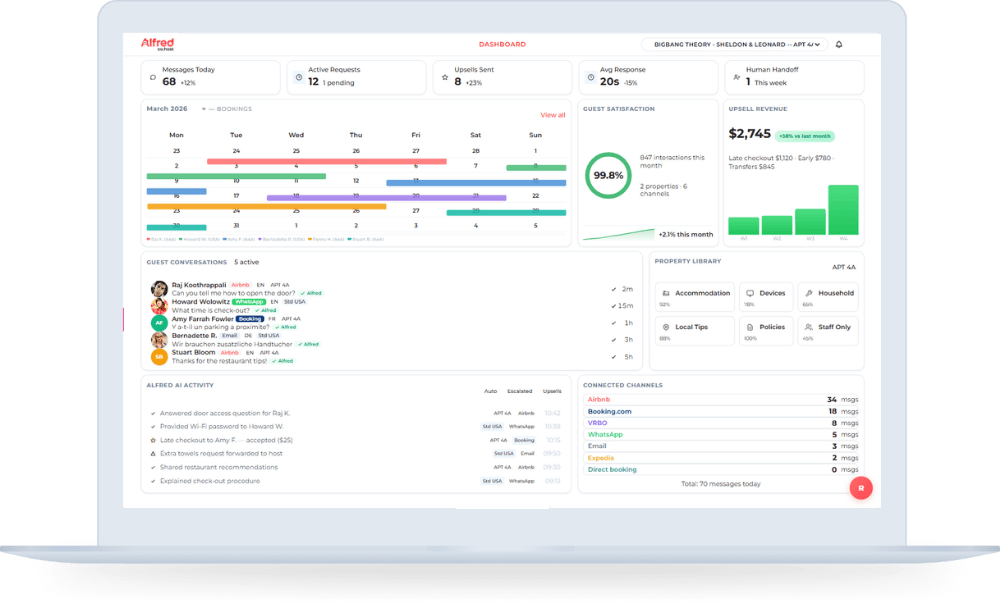
At Alfred, our AI front desk technology addresses implementation complexity through guided setup that has properties operational within 30 minutes. The system learns each property's unique information — from pool hours to pet policies — and handles guest interactions with appropriate context and personality. When situations require human touch, smart escalation ensures the right team member receives complete conversation history. This approach delivers the benefits of AI hospitality technology without the typical implementation complexity. See Alfred pricing to understand how this fits various property sizes and needs.